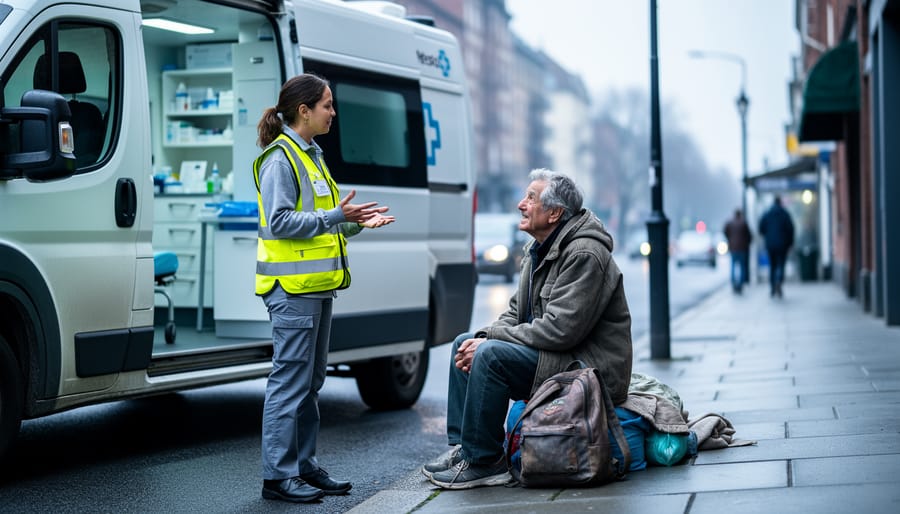
When people search for “homeless mobile,” they’re often looking for information about mobile health services that reach people experiencing homelessness where they are, rather than waiting for them to come to a clinic. These mobile outreach programs bring essential healthcare, mental health support, case management, and other vital services directly to streets, shelters, and encampments, meeting immediate needs and building trusted relationships that can lead to lasting change.
The approach works because it removes the barriers that keep many people from accessing traditional healthcare. Without transportation, identification, insurance, or even a sense of safety in medical settings, visiting a doctor’s office can feel impossible. Mobile health teams go to familiar places, offering care without judgment or prerequisites. This simple shift in where and how services are delivered has profound effects.
As we look at 2026, communities across the country continue to expand these mobile service models because they work. They help people manage chronic conditions, access mental health counseling, connect with housing resources, and begin rebuilding their lives one interaction at a time. The services vary by program, but the core principle remains the same: dignity-centered care delivered with compassion.
This model reflects a deeper truth about human connection. When we meet people where they are, both literally and emotionally, we open doors that seemed permanently closed. The mobile approach isn’t just about convenience. It’s about recognizing that every person deserves access to health and hope, regardless of their circumstances. For many, that first conversation with a mobile outreach team becomes the turning point toward stability and healing.
Understanding Mobile Health Outreach for People Experiencing Homelessness
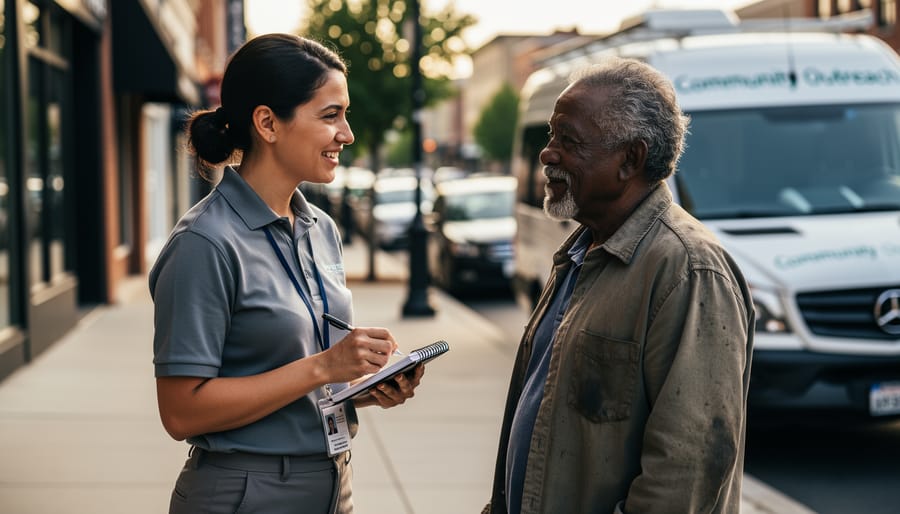
Mobile health outreach represents a fundamental shift in how healthcare reaches people experiencing homelessness. Instead of expecting individuals to come to clinics, hospitals, or appointment offices, mobile health teams bring essential services directly to the streets, shelters, encampments, and community spaces where people are already living. This approach recognizes a simple but powerful truth: if the system creates barriers that people cannot overcome, we must remove those barriers by meeting people exactly where they are.
The obstacles facing someone without stable housing are immense and often invisible to those who have never experienced homelessness. Transportation costs money most do not have. Scheduling appointments requires a phone and the ability to track time reliably. Arriving at a clinic by 8 a.m. means little when you spent the night trying to stay warm or safe. Many traditional healthcare settings feel unwelcoming or judgmental, carrying a weight of past negative experiences. When you are managing immediate survival needs like finding food, shelter, or staying safe, a healthcare appointment three weeks away simply cannot be a priority.
Mobile health interventions dismantle these barriers systematically. Teams arrive at consistent times and locations, building routines people can depend on without navigating complex systems. Services happen on the spot, eliminating the gap between need and access. By coming to familiar spaces, mobile teams reduce the anxiety and stigma many feel entering institutional healthcare settings.
This model centers on dignity and respect. Every interaction acknowledges the person first, not their housing status. Care happens through conversation and relationship building, not rushed transactions. When teams return week after week, trust develops naturally. People begin to share their real health concerns, accept treatment they previously avoided, and start believing that healing is possible for them too.
The person-centered approach means listening more than prescribing, understanding each individual’s unique circumstances, and tailoring support to what actually helps them move forward. It honors the reality that recovery and stability look different for everyone and happen on their own timeline.
Services Delivered Through Mobile Health Programs
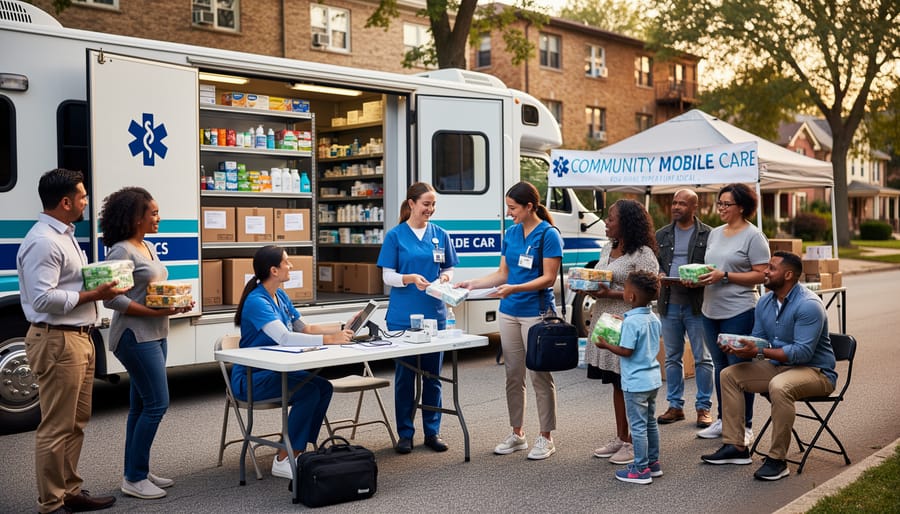
Mobile health programs serving people experiencing homelessness recognize that healthcare needs don’t exist in isolation. These teams arrive ready to address the interconnected challenges that often accompany life without stable housing, providing a breadth of services that would typically require multiple appointments across different locations.
Primary medical care forms the foundation of most mobile health interventions. Practitioners treat acute conditions like infections, injuries, and respiratory illnesses that can quickly become serious when left unaddressed. They manage chronic diseases such as diabetes, hypertension, and heart conditions, conditions that require consistent monitoring but often go untreated among those without regular access to doctors. Wound care becomes particularly critical, as minor cuts or blisters can develop into serious infections when someone lacks clean facilities for proper healing.
Mental health support represents another essential component. Counselors and therapists provide assessment, crisis intervention, and ongoing therapy for individuals dealing with depression, anxiety, trauma, and other mental health challenges. The stability of meeting with the same counselor at a familiar location helps build the trust necessary for meaningful progress.
Addiction recovery services integrate naturally into this model of care. Teams offer medication-assisted treatment for substance use disorders, harm reduction education, and connections to recovery programs. Rather than expecting someone to navigate multiple systems while in crisis, mobile programs bring these vital supports together in one encounter.
Medication management ties these services together. Mobile teams can prescribe, dispense, and monitor medications for both physical and mental health conditions, ensuring continuity when someone may not have a permanent address for mail delivery or secure storage for prescriptions.
Beyond medical care, these programs connect people to housing assistance, benefits enrollment, identification document recovery, and other social services. This approach to integrated services acknowledges a fundamental truth: sustainable health improvement requires addressing the whole person. When medical care, mental health support, addiction treatment, and practical assistance work in concert rather than in separate silos, individuals gain a genuine pathway toward stability and healing.
How These Programs Work in Practice
Mobile health teams serving homeless communities operate on a foundation of consistency and relationship. Rather than waiting for people to come to them, these programs establish regular schedules, often weekly or biweekly visits to the same locations where individuals gather, such as shelters, parks, meal sites, or encampments. Teams arrive at the same time each week, making themselves a predictable, reliable presence. This consistency matters because trust doesn’t develop overnight, especially for people who’ve been let down by systems before.
The initial outreach phase focuses on simply showing up and building rapport. Team members introduce themselves, offer basic services like first aid or hygiene supplies, and let people know when they’ll return. Many teams include peer navigators, individuals with lived experience of homelessness or recovery, whose presence signals authenticity and understanding. Faith-based volunteers also play a vital role, bringing compassion rooted in seeing the inherent dignity in every person. Through volunteer orientation these team members learn trauma-informed approaches that respect boundaries and meet people without judgment.
As relationships deepen, the team can provide more comprehensive care. A nurse might manage chronic conditions like diabetes or hypertension during weekly visits. A counselor offers mental health support in a quiet corner of the van. Staff connect individuals to housing resources, coordinate with addiction treatment programs, and arrange follow-up appointments. Some programs now integrate smartphone healthcare tools to maintain contact between visits, though face-to-face connection remains central.
Behind the scenes, mobile teams coordinate constantly with shelters, hospitals, social workers, and other service providers. This network ensures that when someone is ready to transition to housing or enter treatment, the pathway is already mapped. The work is slow, patient, and deeply relational, healing happens in the context of showing up, again and again, with care that says: you matter.
The Impact of Meeting People Where They Are
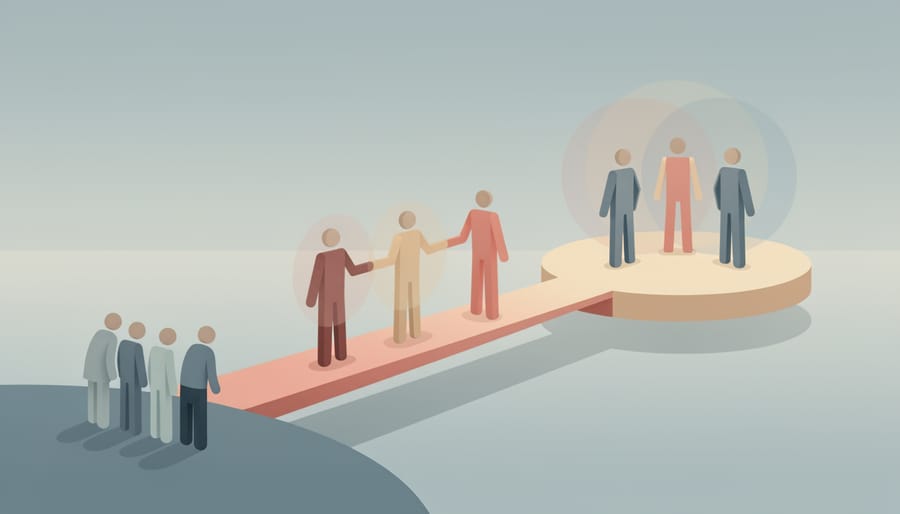
When healthcare teams consistently show up, week after week, in parks, under bridges, or at encampments, they create something powerful: a foundation of trust that opens doors to healing. Mobile health interventions demonstrate remarkable effectiveness precisely because they remove the barriers that keep vulnerable individuals from seeking care elsewhere.
Research consistently shows that individuals experiencing homelessness who engage with mobile health programs report better management of chronic conditions like diabetes and hypertension, conditions that often go untreated when appointments require transportation and identification. By bringing medication directly to people, teams help stabilize what might otherwise spiral into crisis. Mental health symptoms ease when counseling becomes accessible on familiar ground rather than in institutional settings that can feel unwelcoming or intimidating.
The pathway from street to stability rarely follows a straight line. Individuals we serve often describe the journey as one of rediscovering their worth and agency. When someone feels seen and respected, when a nurse asks permission before examining a wound or a counselor remembers details from last week’s conversation, something shifts. That respect becomes a mirror reflecting back their inherent dignity.
Recovery unfolds at its own pace. Some people connect with housing resources within months; others need years of steady support before they’re ready to take that step. What matters is that the door stays open, that care remains available without judgment, and that each person moves forward according to their own timeline. The programs that meet people where they are don’t just treat symptoms, they restore hope, one encounter at a time.
Common Questions About Mobile Health Services for Homeless Individuals
Who can access mobile health services for people experiencing homelessness?
These services are open to anyone experiencing homelessness or housing instability, regardless of insurance status, immigration status, or ability to pay. Most programs operate on a no-barrier model, meaning you don’t need an appointment, ID, or referral to receive care.
How do I find mobile health services in my area?
Contact local homeless shelters, community health centers, or faith-based organizations serving your community, they can direct you to mobile health schedules and locations. Many programs maintain regular weekly schedules at specific sites like parks, libraries, or community engagement events where teams are easy to find.
How can I support these programs?
You can volunteer your professional skills if you’re a healthcare provider, serve as a peer navigator or driver, donate medical supplies or funding, or advocate for sustained public investment in mobile health initiatives. Contact organizations directly to learn about their specific needs and volunteer opportunities.
What happens after the first visit with a mobile health team?
Teams work to establish continuity of care through regular follow-up visits at the same locations, medication refills, ongoing treatment for chronic conditions, and warm handoffs to housing programs or specialized services. The goal is building a sustained relationship that supports your path toward stability and wellness, however long that journey takes.
The questions people ask about mobile health services reveal both hope and hesitation. Many wonder whether they truly qualify for care or whether past struggles with the healthcare system will repeat themselves. The answer is straightforward: if you’re experiencing homelessness, you belong. These programs exist specifically to remove the barriers that traditional settings create.
Funding typically comes from a mix of public health grants, nonprofit partnerships, private donations, and faith communities committed to serving their neighbors. Some programs receive support through Medicaid reimbursement for covered services, while others rely entirely on charitable giving. This diverse funding base helps ensure services remain free at the point of care, so financial concerns never prevent someone from receiving treatment.
What makes these interventions effective goes beyond medical expertise. Trust matters most. When teams show up consistently at the same place and time, when they remember your name and your story, when they treat you with the dignity every person deserves, healing becomes possible. That reliability creates the foundation for everything else, from managing diabetes to addressing addiction to finding stable housing.
Mobile health interventions for homeless communities stand as tangible expressions of compassion, bringing not just medical care, but hope, dignity, and the recognition that every person matters. These programs embody the principle of meeting people exactly where they are, without judgment or prerequisites, reflecting a love that seeks out those society often overlooks.
Whether you’re seeking services, considering how you might volunteer your time, or looking to support organizations dedicated to this mission, your engagement makes a difference. Every act of compassion, every connection made, every service delivered, every barrier removed, creates space for healing and transformation. This work reminds us that circumstances don’t define worth, and that everyone deserves the chance to reclaim their story with support, care, and genuine human connection. The journey toward wellness takes different paths for different people, but it begins when someone shows up with helping hands and an open heart.