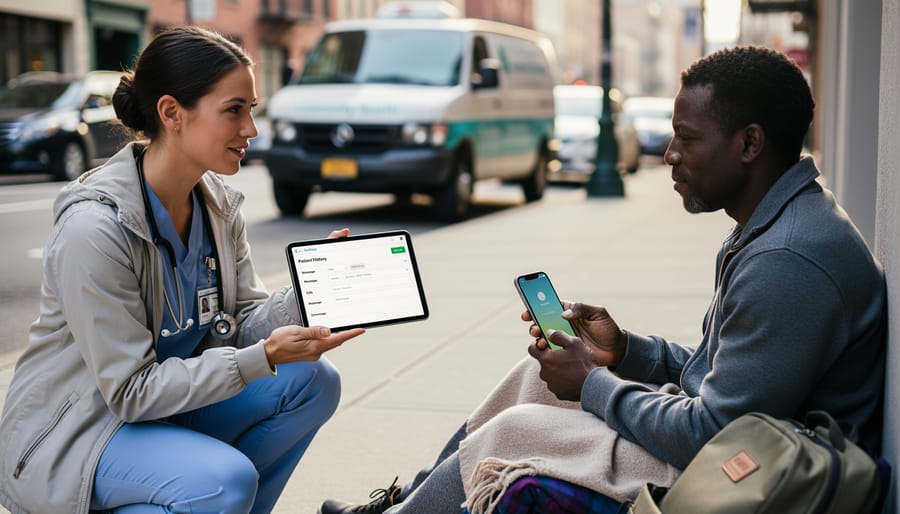
Smartphone healthcare refers to the use of mobile devices and wireless technology to deliver medical services, health information, and care coordination directly to individuals wherever they are. For people experiencing homelessness, this approach breaks down some of the most stubborn barriers to getting care: lack of transportation, no fixed address, difficulty keeping appointments, and the simple fact that traditional clinic hours don’t always align with the unpredictable realities of life on the streets.
A nurse practitioner can now pull up someone’s medical history on a tablet during a street outreach visit. A case manager can send appointment reminders via text to a phone obtained through a community program. A person living in their car can video-chat with a mental health counselor without needing to find a ride across town. These aren’t futuristic possibilities. They’re happening right now in communities that have decided no one should go without care simply because they don’t have a roof over their head.
What makes smartphone healthcare so powerful for homeless populations is its ability to meet people where they are, both literally and figuratively. The technology adapts to their circumstances rather than demanding they adapt to a system that wasn’t built with them in mind. But it only works when paired with real human connection, the kind that says you matter and your health matters.
This article explains how smartphone healthcare functions in outreach settings, what services it can deliver, and how organizations are using it to bring dignity and healing to some of our community’s most vulnerable neighbors.
What Smartphone Healthcare Means for People Experiencing Homelessness
Smartphone healthcare in homeless services means delivering medical care, mental health support, and health education directly through mobile devices that fit in your pocket. Instead of requiring people to navigate complex healthcare systems, find transportation to distant clinics, or wait weeks for appointments, this approach brings doctors, counselors, and resources to individuals wherever they are, at a shelter, a drop-in center, or on the street.
- Mobile health (mHealth)
- Healthcare services delivered through smartphones and tablets, including apps that track medications, send appointment reminders, and provide health information anytime.
- Telehealth
- Live video appointments with doctors, therapists, or counselors that happen through a phone screen rather than in a physical office.
- Health apps
- Programs on phones that help manage chronic conditions like diabetes, track sobriety milestones, or connect people to crisis support when they need it most.
- Remote monitoring
- Technology that lets healthcare providers check in on someone’s health progress through digital tools, ensuring continuity of care even when someone moves between shelters.
This technology matters profoundly for people experiencing homelessness because it removes transportation barriers that prevent care. Someone doesn’t need a car, bus fare, or the ability to take time off work to see a doctor. The rigid 9-to-5 clinic schedule no longer creates an impossible choice between staying safe in a shelter and making a medical appointment. Lost identification or missing insurance cards become less of a roadblock when a trusted case worker can help coordinate care through a tablet right there in the moment.
Most importantly, smartphone healthcare meets people with dignity and respect. It acknowledges that everyone deserves access to quality care, regardless of where they sleep at night.
How Smartphone Healthcare Works in Outreach Programs
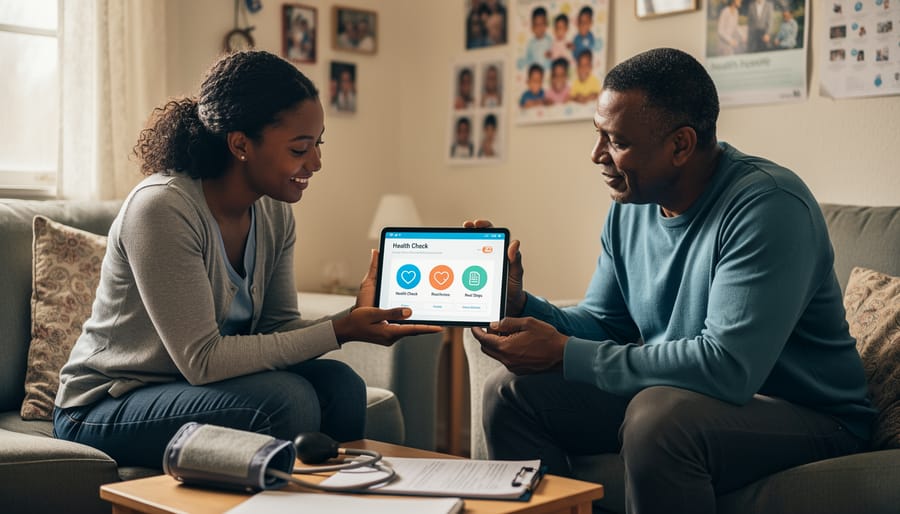
The mechanics behind smartphone healthcare in outreach settings blend simple technology with human connection. When a case worker sits down with someone at a shelter or on the street, they often carry a tablet loaded with health apps and secure communication tools. These video telehealth tablets become a bridge to doctors, counselors, and specialists who can see patients in real time, no clinic visit required. A nurse practitioner might examine a persistent cough over video while the case worker helps translate medical terms into everyday language.
The technology handles multiple tasks simultaneously. Medication reminder apps send gentle nudges when it’s time to take prescriptions, which matters enormously for someone managing diabetes or high blood pressure without a stable routine. Research shows that text messaging improved adherence to treatment plans among vulnerable populations, turning smartphones into personal health coaches. Digital health records travel with individuals as they move between shelters, soup kitchens, and temporary housing, so every provider sees the full picture rather than starting from scratch each time.
The core functions working together include:
- Video consultations connecting patients directly with doctors and mental health counselors
- Medication tracking apps that remind individuals when to take prescriptions and refill
- Automated appointment reminders sent via text to reduce missed visits
- Health education content explaining conditions and treatment in accessible language
- Crisis hotline access providing immediate support during mental health emergencies
- Resource navigation tools showing nearby clinics, pharmacies, and social services
Behind the screens, case workers provide the human infrastructure that makes technology work. They charge devices, troubleshoot login problems, sit alongside clients during telehealth visits, and explain how apps function. Secure messaging platforms let individuals text their case manager with health questions between appointments, creating continuity that used to be impossible. The technology amplifies compassion rather than replacing it.
Types of Smartphone Health Services Reaching Vulnerable Communities
Mental Health and Addiction Recovery Support
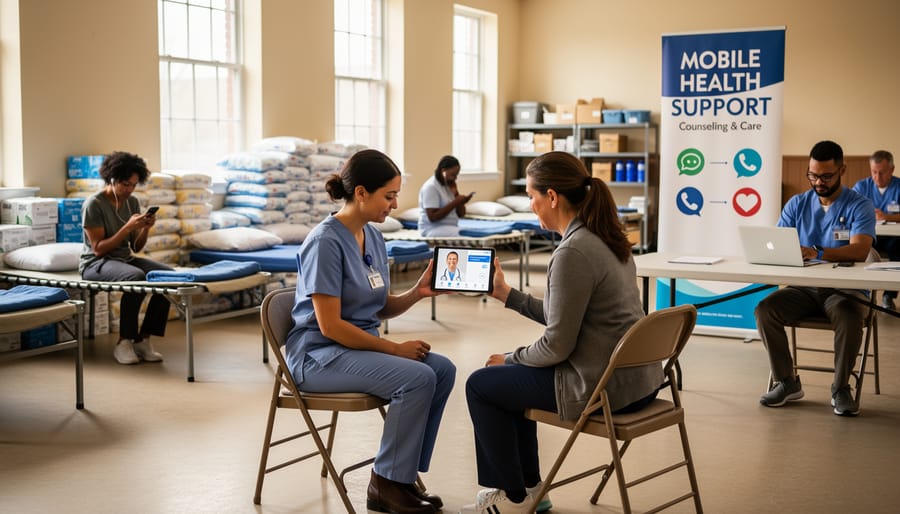
Mental health and addiction recovery apps transform smartphones into lifelines for individuals working to rebuild stability. Crisis counseling services like Crisis Text Line connect people to trained counselors within minutes through simple text messages, no appointment needed, no wait times, just immediate human support when desperation hits at 2 a.m. or during a triggering moment on the street. Sobriety tracking apps help individuals count days clean, set personal goals, and celebrate milestones that once felt impossible, turning abstract recovery into visible progress they can hold in their hands.
Video therapy sessions bring weekly counseling directly to shelters and drop-in centers, eliminating the barrier of traveling across town to keep an appointment. Peer support platforms create safe digital spaces where people facing similar struggles share encouragement, strategies, and hope without judgment. For someone battling addiction while experiencing homelessness, these smartphone tools provide consistent support between case worker visits and create structure when daily life feels chaotic. The phone becomes more than technology, it becomes a companion in recovery, a reminder that help is always within reach, and tangible proof that someone believes in their healing.
Primary and Preventive Medical Care
Many individuals experiencing homelessness live with chronic health conditions that require ongoing monitoring and management. Smartphone healthcare makes it possible for someone with diabetes to connect with a doctor via video call from a shelter or community center, review blood sugar readings tracked on a phone, and adjust medication without missing a day of work or losing a spot in line at a resource center. A nurse can examine a wound through a tablet camera, determine if it needs in-person treatment, or guide proper cleaning and bandaging right there.
Prescription refills become simpler when reminders arrive by text and refill requests happen through an app rather than requiring multiple trips to a pharmacy. Health screenings for blood pressure, vision, or dental problems can be conducted at outreach sites with results sent directly to a physician who reviews them remotely and follows up. This continuity matters deeply when someone lacks a stable address or regular transportation.
For people rebuilding their lives, staying on top of preventive care means avoiding emergency room visits that disrupt everything else. Smartphone healthcare turns episodic crisis management into sustained wellness support, meeting people where they are with the medical attention they deserve.
Navigation and Resource Connection
Finding help when you need it most shouldn’t require memorizing addresses or navigating confusing bureaucracies. Smartphone healthcare platforms now include resource-finding tools that show individuals experiencing homelessness exactly where to go for their next meal, a safe place to sleep, or medical care. Apps like Aunt Bertha and FindHelp display nearby shelters, food pantries, and free clinics on a simple map, updated in real time with bed availability and operating hours. GPS navigation removes the guesswork, guiding someone step-by-step to a warm meal or an open clinic door.
Beyond mapping resources, these platforms coordinate care behind the scenes. Digital case management systems let outreach workers, doctors, and housing advocates share notes and track progress within a secure system, so a client doesn’t repeat their story at every door. When a case worker schedules a medical appointment and arranges transportation, the system sends reminders and updates to the individual’s phone. This connected approach transforms scattered services into a unified safety net, replacing frustration and missed opportunities with clarity and follow-through that honors each person’s dignity.
Real-World Impact: How Smartphone Healthcare Is Used Daily
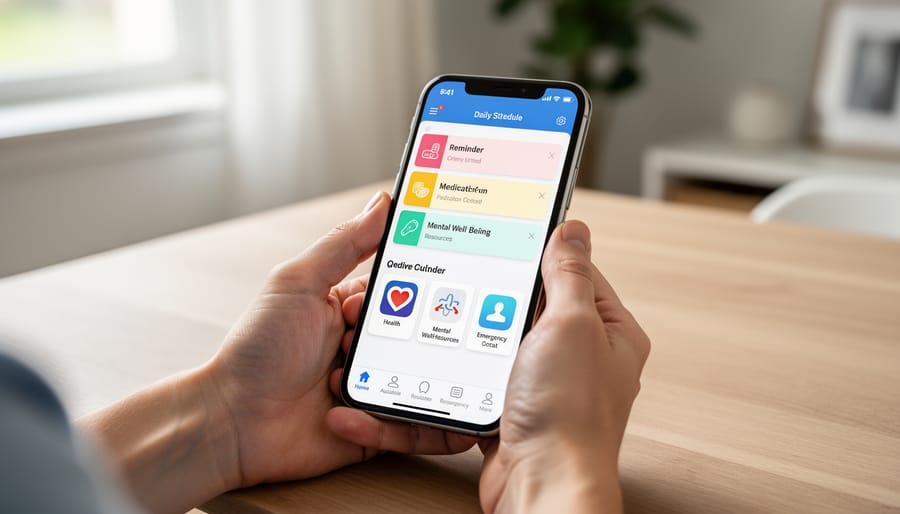
At MarketMobile Health Interventions for the Homeless, smartphone healthcare transforms abstract medical appointments into real moments of healing. Michael, a veteran who spent two years without stable housing, now manages his Type 2 diabetes through daily medication reminders that vibrate on a loaner phone each morning at 8 a.m. Before receiving this device, he missed insulin doses regularly and ended up in emergency rooms three times in six months. The simple alerts keep his condition stable, and a monthly video check-in with his doctor lets him adjust his treatment without missing a shift at his new job. He carries his health records on that phone, a digital safety net that follows him wherever he goes.
On Tuesday afternoons, Sarah sits in a quiet corner of a downtown drop-in center for her weekly counseling session. Through a tablet provided by the center, she connects with a therapist who specializes in trauma recovery. The video calls offer consistency that was impossible when she moved between shelters every few nights. She’s been meeting with the same counselor for seven months now, building trust and working through the pain that once fueled her addiction. The technology makes the relationship possible, but Sarah says it’s the reliability that changed everything.
Case workers like James coordinate entire journeys toward stability through smartphones in healthcare programs. On his tablet, he tracks housing applications, schedules medical appointments, connects clients with mental health services, and follows up on job leads, all in one system that updates in real time. When he meets someone new at an outreach event, he can immediately check bed availability at partner shelters and book an intake appointment while they’re standing together. The device doesn’t replace his compassion, but it multiplies what one dedicated person can accomplish in a day.
Overcoming Barriers: Making Technology Work for Everyone
Technology means nothing without access and trust. Many people experiencing homelessness do own smartphones, but cracked screens, dead batteries, and limited data plans create real obstacles. Compassionate programs address these challenges head-on by providing loaner devices that clients can use at shelters or take with them, ensuring no one misses a doctor’s appointment because their phone died. Free Wi-Fi at drop-in centers and partnering organizations removes the connectivity barrier, making telehealth visits possible even without a data plan.
Digital literacy can’t be assumed. Many individuals haven’t used smartphones regularly or feel intimidated by apps and video calls. That’s where patient, one-on-one tech training makes the difference, case workers sitting beside someone, walking through each step, practicing together until confidence builds. This personal support often happens during volunteer orientation where new team members learn that teaching someone to unmute themselves on a video call is as valuable as any medical intervention.
Privacy concerns are especially sensitive for vulnerable populations who’ve experienced trauma or distrust of systems. Programs use HIPAA-compliant platforms with encrypted connections, never storing health information on personal devices. Staff explain these protections clearly, showing clients exactly who can see their information and how it’s safeguarded. When someone understands their medical conversations remain confidential, they’re more willing to seek the care they need. Trust grows through transparency and consistent follow-through, not just secure technology.
Common Questions About Smartphone Healthcare for the Homeless
Do people experiencing homelessness actually have smartphones?
Many do, though devices may be older models or have limited data plans. Programs often provide loaner phones or tablets at shelters and outreach centers so everyone can access healthcare services regardless of personal device ownership.
How is health information kept private?
Secure platforms use encryption and password protection to safeguard medical records. Staff receive training on privacy protocols, and individuals control who sees their information, building trust through transparency.
What happens if someone loses their phone?
Health records remain stored securely in the cloud, not just on the device. Case workers can help restore access through another phone or tablet, ensuring continuity of care despite setbacks.
Can smartphone healthcare replace in-person medical visits?
It complements rather than replaces face-to-face care. Video appointments handle routine check-ins and urgent concerns, while serious conditions still require physical examinations at clinics or hospitals.
How can faith communities support these initiatives?
Churches and community groups can donate gently used phones, provide Wi-Fi access in meeting spaces, offer volunteer support to teach digital skills, and host public engagement events where healthcare providers demonstrate these tools.
These questions surface in conversations with caring individuals who want to understand how technology serves people with dignity. The answers reveal that smartphone healthcare works because it combines innovation with human compassion, meeting practical needs while honoring each person’s worth and potential for healing.
Smartphone healthcare is more than an innovation. It’s compassion made practical, meeting people experiencing homelessness exactly where they are with the medical care, mental health support, and dignity they deserve. The phones and tablets are simply tools. The real power comes from the hearts behind them, the case workers, volunteers, and healthcare providers who see each person as worthy of respect and healing.
Modern technology can absolutely reflect timeless values. When a video call connects someone to a counselor who listens without judgment, when a medication reminder helps restore physical health, when a simple text message says “you matter”, that’s love in action. These tools break down the walls that have kept vulnerable neighbors from care, creating pathways to wellness that honor the whole person.
Restored health opens doors to restored lives. As individuals regain their physical and mental well-being through accessible smartphone healthcare, they rediscover hope, purpose, and the strength to rebuild. You can be part of this transformation. Whether through community events donations, or simply spreading awareness, your involvement matters. Together, we can ensure that every person, regardless of their circumstances, receives the compassionate care that reflects their inherent worth.